Many Bergen County neighborhoods were built during rapid construction booms in the 1980s through early 2000s, when trees were often planted quickly – and not always correctly. While these trees have matured and added value to properties, many are now showing signs of unexplained decline despite regular watering, mulching, and care.
One of the most common causes is a buried root collar, a planting issue that restricts oxygen flow and slowly weakens the tree. Air spading and root collar excavation directly address this hidden problem, and addressing root collar problems in winter helps prevent further decline when trees re-enter active growth in spring.
Key Takeaways
- Root collar problems from 1980s-2000s construction boom continue affecting Bergen County trees, causing expensive decline in mature specimens.
- Winter air spading timing in Northern New Jersey provides optimal conditions for tree recovery and landscape protection during dormant season.
- A Licensed Tree Expert assessment identifies which declining trees are candidates for successful air spading versus those beyond recovery.
- Air spading can reverse tree decline and preserve thousands in replacement costs when performed before advanced decay sets in.
- Professional air spading has high success rates for saving valuable mature trees when root collar problems are caught early enough.
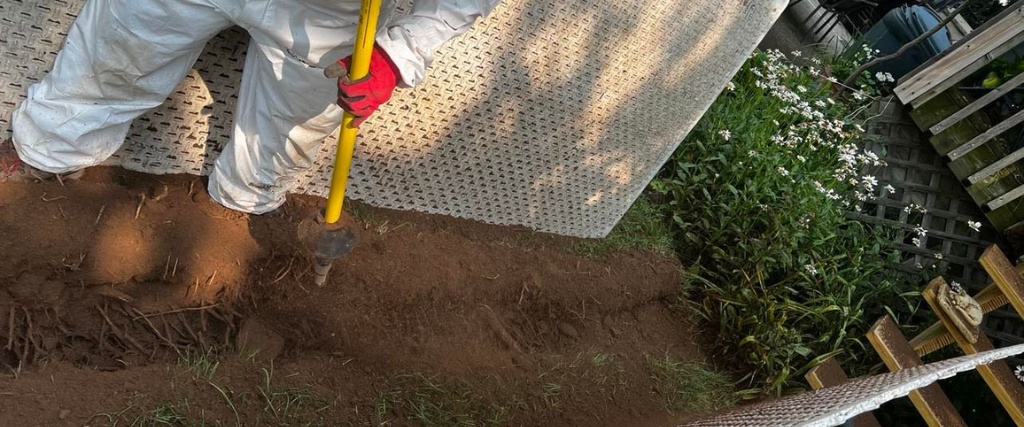
Air spading uses high-pressure compressed air to remove soil while leaving delicate feeder roots intact, allowing for precise root collar assessment and treatment.
What Is Air Spading?
Air spading uses high-pressure compressed air to safely remove soil from around tree root systems without damaging the delicate feeder roots that traditional digging methods destroy. With this method, we can safely remove mulch and soil without stressing your tree.
Traditional digging fails because shovels and mechanical excavation equipment inevitably damage the fine feeder roots essential for tree health and recovery. The root collar area is often buried 2 or more inches too deep due to improper planting, making visual inspection impossible without proper soil removal. Hand digging near sensitive root systems risks cutting through critical roots, while air spading leaves healthy root tissue completely intact.
The compressed air method reveals the complete root architecture, showing exactly which roots are girdling the trunk and which healthy roots to preserve. This precision makes the difference between successful intervention and accidental damage that worsens the tree’s decline.
How Air Spading Saves Declining Trees
When a tree’s root collar is buried under excess soil, it creates a slow strangulation effect that can take years to become visible in the canopy. The root collar, which should flare naturally at the base of the trunk, needs direct access to oxygen to function properly. When buried under even 2-3 inches of soil, this critical area becomes anaerobic, meaning it lacks the oxygen necessary for healthy root function.
Air spading removes the excess soil around the tree’s root flare and allows it to breathe. With the natural trunk flare now visible, the tree can get the proper oxygen, and arborists can examine the area for any sign of decay or girdling roots.
What Are the Signs Your Tree Needs Air Spading and Root Collar Excavation?
Visual warning signs indicate when trees may benefit from root collar excavation. Knowing what to look for will help you know when to get professional air spading before it’s too late.
Visual Warning Signs
Several key indicators suggest when trees may benefit from root collar excavation, including:
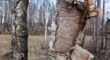
- Missing Trunk Flare: Healthy trees should show a gradual widening where the trunk meets the ground but buried root collars create a “telephone pole” appearance where the trunk disappears straight into the soil.
- Declining Crown Health: Trees may show premature fall color, sparse foliage during the growing season, or unexplained dieback in upper branches while soil moisture and fertility appear adequate.
- Fungal Growth Near Base: Mushrooms or fungal growth near the tree base often indicate anaerobic soil conditions or decay processes related to buried root collars.
Advanced Symptoms of Root Collar Problems
More severe indicators suggest root collar problems have progressed significantly, such as:
- Visible Girdling Roots: Thick roots may become visible above ground, appearing as roots that circle the trunk rather than extending outward, creating pressure that restricts nutrient and water flow.
- Progressive Canopy Dieback: Dieback starts in upper branches and progresses downward, indicating compromised root function affecting the entire tree structure.
- Structural Instability: Trees may develop unexplained leans or show signs of instability during wind events, indicating compromised root anchorage from girdling or decayed roots.
Why Do Bergen County Trees Develop Root Collar Problems?
Many root collar problems in Bergen County trees can be traced back to how properties were developed and trees were planted decades ago. Even trees that appear well-established today may still be affected by conditions created during construction, leading to long-term root stress and gradual decline.
- Rapid Construction During the 1980s–2000s: Large-scale grading buried existing trees under excess soil and created poor planting conditions for new installations.
- Trees Planted too Deeply During Development: Many trees were installed with root collars buried 2–4 inches below grade in disturbed construction soil.
- Soil Compaction from Heavy Equipment: Construction machinery compacted surrounding soil, limiting oxygen flow and restricting proper root development.
- Heavy Clay Soils Common in Bergen County: Clay-rich soils retain moisture and create low-oxygen conditions around improperly planted root systems, worsening decline.
Why Is Winter the Ideal Time for Air Spading and Root Collar Excavation in Northern NJ?
Late winter timing (February through March) provides multiple advantages for air spading and root collar excavation in Northern New Jersey. Tree biology favors dormant season intervention, when trees aren’t actively growing and can better tolerate the stress of root system exposure and selective root removal.
Dormancy Reduces Stress
During winter dormancy, trees have minimal energy demands and aren’t producing new growth that could be disrupted by excavation work. Root pruning performed during this period allows adequate healing time before spring growth begins, when trees need full root function to support new leaf emergence and active metabolism.
Tree stress from air spading is significantly reduced when performed during dormancy. The tree can redirect energy toward healing root wounds rather than competing between recovery and active growth processes.
Dormant Landscapes Improve Access
Dormant lawns and garden beds provide better access for equipment and resist damage from foot traffic and machinery. There are no active plantings to work around or protect during the excavation process, allowing crews to position equipment optimally and complete work efficiently.
Dry winter weather often leaves your ground firm and stable, reducing soil compaction or damage from foot traffic.
Winter Scheduling Reduces Delays
Equipment and crew availability improve significantly during the winter months when demand for other tree services decreases. Projects can be completed faster without competing against high-demand spring scheduling, and crews can focus exclusively on the technical precision required for successful root collar work.
Soil conditions become more stable after winter freeze-thaw cycles, making excavation more predictable. This timing also allows for spring soil amendments and follow-up care to be perfectly scheduled for the tree’s natural growth cycle.
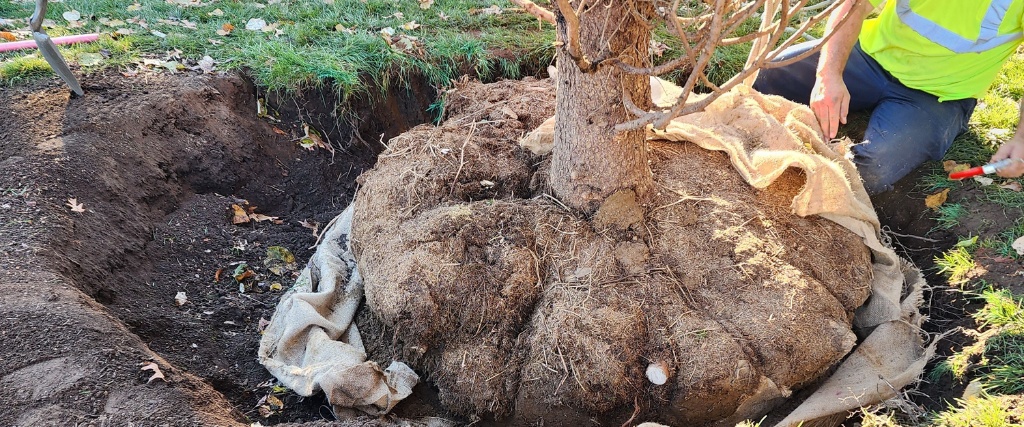
Proper planting depth is crucial for long-term tree health, as trees planted too deeply often develop the root collar problems that require air spading years later.
How Does Air Spading Cost Compare to Tree Replacement?
Large specimen trees cost thousands of dollars to replace, assuming suitable replacement trees can even be found and installed in established landscapes. Installation challenges often require expensive equipment access, landscape modifications, and extended establishment periods. Even with successful installation, new trees take 10-15 years to provide the same shade, privacy, and aesthetic value as mature specimens.
Mature trees add 5-15% to home values in affluent suburban areas, like Bergen County, making preservation a sound financial investment beyond replacement cost alone. Property value impacts extend beyond the individual tree, as mature tree canopy defines neighborhood character in established communities. Losing significant specimens can affect perceived property values throughout the immediate area.
Professional air spading is also normally a one-time treatment, making it quite economical. Compared to paying for tree removal, purchasing a new tree, and scheduling work to ensure it survives, this one-time investment into tree preservation is much more affordable.
Frequently Asked Questions About Air Spading and Root Collar Excavation
How long does air spading take for a typical mature tree?
Most air spading projects take a few hours, depending on soil conditions and root collar depth. The process includes utility marking, soil excavation, root assessment, and initial follow-up care.
What tree species are most likely to develop root collar problems?
Norway maples, London plane trees, and various oak species show the highest susceptibility to root collar problems in our region. Girdling root issues typically develop 7-15 years after improper planting as the trees mature. Any tree that was buried two or more inches too deep has higher mortality rates than properly planted trees.
What should I expect during the air spading process?
Licensed operators use high-pressure compressed air to carefully remove soil around the root collar. You’ll see the true trunk flare exposed and any girdling roots identified for removal.
Can air spading damage healthy tree roots?
Properly performed air spading by certified operators does not damage healthy roots. The compressed air removes soil while leaving root systems intact, unlike mechanical excavation methods.
When should air spading be avoided?
Air spading should be avoided if trees show advanced decay, structural failure, or when root collar problems have progressed beyond treatment effectiveness.
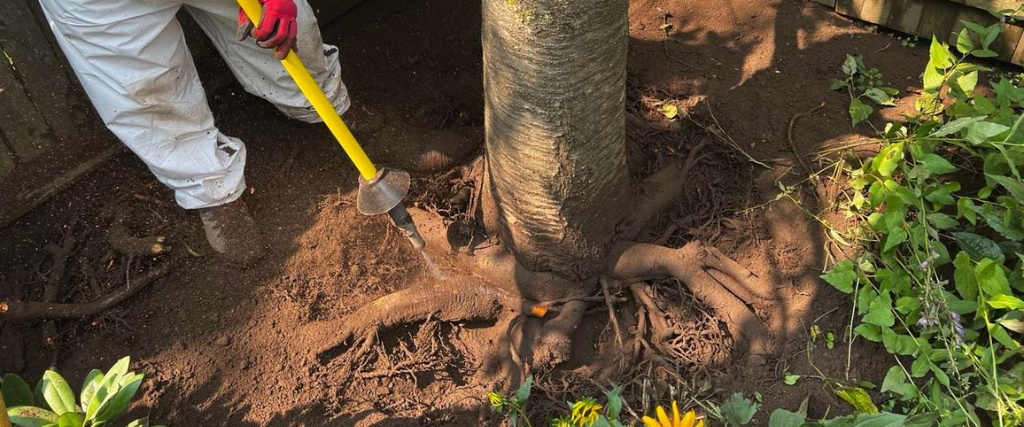
Professional air spading requires proper safety equipment and ground protection to safely excavate around sensitive root systems without damage.
Let Aspen Tree Help Save Your Investment Before Spring Growth Begins
Winter air spading provides Bergen County property owners the strategic advantage of addressing root collar problems during the optimal biological window for tree recovery. Licensed Tree Expert assessment distinguishes between treatable root collar problems and trees that have declined beyond recovery, ensuring your investment focuses on trees with genuine potential for long-term health.
The team at Aspen Tree has handled countless trees with buried root collars and gotten them back to perfect health with air spading. Call us today at 201-939-8733 or request a quote online for air spading and other tree preservation services.