As the weather warms up in Northern New Jersey, people start spending more time outside again. That’s usually when they begin to notice things that didn’t stand out over the winter –especially when it comes to their trees. Small holes in the bark or sections of thinning canopy can be early signs of bronze birch borer, an insect that’s been affecting birch trees throughout the region.
Early spring is one of the best times to assess for potential damage before adult beetles emerge later in the season. Identifying the problem now gives you time to plan treatment, remove infested branches, and take preventative steps to reduce further damage.
Key Takeaways
- Bronze birch borer is a destructive beetle that attacks stressed birch trees, particularly non-native species common in Bergen County landscapes.
- European and Asian white birch varieties are highly vulnerable, while native species, like river birch, show natural resistance.
- Early spring is the ideal time to assess damage and plan next steps before new growth and pest activity begin.
- Professional diagnosis and custom treatment plans offer the best protection for valuable mature birch trees.
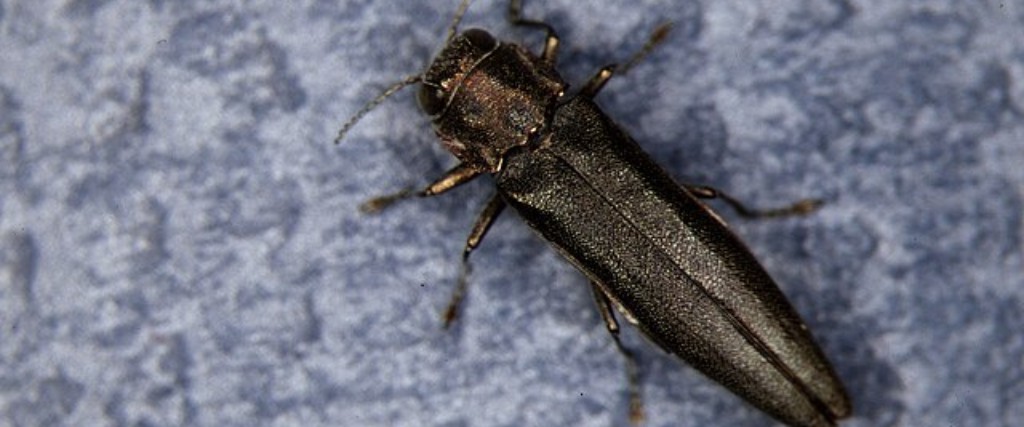
photo by: Whitney Cranshaw, Colorado State University / © Bugwood.org
What Is Bronze Birch Borer?
Bronze birch borer (Agrilus anxius) is a native beetle that has become a serious threat to birch trees throughout Bergen County. According to Rutgers University research, this wood-boring insect has become increasingly problematic in New Jersey’s urban and suburban environments.
The destructive power of the pest lies in the larval stage, when they feed under the bark, creating serpentine galleries that disrupt the tree’s water and nutrient transport system. These feeding tunnels essentially girdle branches and eventually the trunk, cutting off the tree’s lifeline. In Bergen County, adults emerge from late May through June, when temperatures consistently reach the mid-70s, though timing can vary with weather.
Once established, bronze birch borer can kill a susceptible tree within 2-3 years. The beetles preferentially attack stressed trees, making Bergen County’s suburban conditions particularly problematic for non-native species.
Why Are Bergen County Trees at Risk from Bronze Birch Borer?
Bergen County’s suburban environment, with its widespread ornamental plantings and environmental stressors, creates ideal conditions for bronze birch borer infestations. The clay soils common throughout Clifton, Wayne, Montclair, and surrounding areas retain moisture poorly during dry spells, stressing birch trees that prefer consistent soil moisture. Additionally, lawn irrigation systems often don’t adequately reach tree root zones. This leads to stressed trees less able to fight off borer infestations.
Mature birch trees planted in the 1990s and early 2000s are now reaching the size and stress levels that make them prime targets. These valuable landscape specimens represent significant investments that homeowners naturally want to protect.
Birch Species That Are Most Vulnerable to Bronze Birch Borer
European white birch and weeping birch varieties, extremely popular in Bergen County landscapes, lack the co-evolved defenses found in native species. These non-native trees are highly vulnerable and often show symptoms within the first year of infestation, while native species, like river birch, sweet birch, and cherry birch, demonstrate natural resistance and rarely suffer significant damage.
Research from Rutgers confirms that native white birches show significantly better resistance compared to their European counterparts. This resistance makes river birch an excellent choice for new plantings.
Why Is Early Spring the Best Time for Bronze Birch Borer Assessment?
An early spring assessment offers Bergen County homeowners a critical window for bronze birch borer evaluation before the beetle’s active season begins. This timing provides several strategic advantages:
- Better Visibility: Without full canopy, arborists can clearly inspect branches and trunk for signs of damage.
- More Accurate Diagnosis: Existing damage is easier to identify without confusion from new exit holes later in the season.
- Pre-Emergence Timing: Assessments happen before adult beetles emerge in late May and June, when activity increases.
- More Effective Treatment Planning: Early evaluations allow homeowners time to schedule pruning, develop treatment plans, and apply systemic treatments before peak beetle activity.
How Can You Tell if Your Birch Tree Has Bronze Birch Borer Damage?
Several distinct warning signs indicate bronze birch borer activity, with early detection crucial for treatment success. Recognizing these symptoms helps Bergen County homeowners understand when professional evaluation becomes necessary.
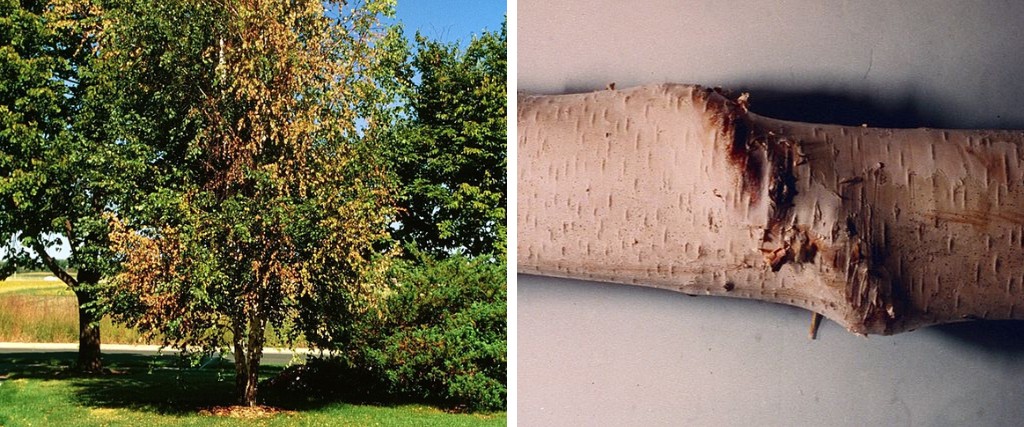
Left: Common Name: bronze birch borer Descriptor: Damage/ Steven Katovich, USDA Forest Service, Public domain, via Wikimedia Commons Right: E. Bradford Walker, Vermont Department of Forests, Parks and Recreation / © Bugwood.org
Symptoms of Bronze Birch Borer to Watch For
Several distinct symptoms indicate bronze birch borer activity in your Bergen County birch trees:
- Physical Bark Damage: Look for distinctive D-shaped emergence holes approximately 1/8 inch in diameter where adult beetles have exited the tree. Fresh holes show light-colored wood inside, while older exit points appear darker. You may also notice raised ridges or bumps on branches and the trunk where larvae feed beneath bark, often accompanied by rusty brown staining around damaged areas.
- Crown and Foliage Symptoms: Bronze birch borer damage typically begins with yellowing leaves starting from the top of the tree, with progressive downward spread of discoloration. The canopy develops a thinning appearance with noticeably fewer and smaller leaves than normal, followed by branch dieback beginning in the upper crown.
- Overall Tree Decline: Affected trees show sparse foliage in areas that were previously full, dead or dying branches in the upper portion, and a general weakened appearance despite adequate water and care. These symptoms worsen progressively over successive growing seasons if left untreated.
Early detection of any combination of these symptoms warrants immediate professional evaluation, as bronze birch borer damage becomes increasingly difficult to treat as it progresses. Within a few years, the tree’s crown will decline heavily, and it may be beyond saving.
Signs You Need a Professional Assessment for Bronze Birch Borer
Any discovery of D-shaped emergence holes warrants immediate professional evaluation, as these indicate an established infestation. Crown thinning in white birch varieties, particularly when combined with branch dieback, suggests possible bronze birch borer activity. A comprehensive pest and disease evaluation can distinguish bronze birch borer from other tree health issues.
Should I Treat or Remove a Tree with Bronze Birch Borer Damage?
In many cases, treatment is the better option – especially when damage is caught early. Mature birch trees provide shade, privacy, and curb appeal that can take decades to replace, and professional treatment is often far more cost-effective than removal and replanting. When less than about 30% of the canopy is affected, targeted pruning and a customized treatment plan can protect the tree and prevent further damage.
However, removal may be the safer choice if the tree is too far gone. When canopy loss exceeds roughly 40%, or when structural integrity and safety become concerns, the chances of recovery drop significantly. A professional assessment helps determine whether the tree can be preserved or if removal is the more responsible long-term decision.
Frequently Asked Questions About Bronze Birch Borer
When do bronze birch borers emerge in Bergen County?
Bronze birch borers emerge in late May to early June, when Northern New Jersey temperatures consistently reach the mid-70s, making early spring the ideal time for pre-emergence assessment.
Can bronze birch borer kill my tree?
Yes, bronze birch borer can kill susceptible birch species within 2-3 years if left untreated, particularly European white birch and weeping varieties common in Bergen County.
Are river birch trees safe from bronze birch borer?
River birch trees (Betula nigra) have natural resistance to bronze birch borer and are rarely affected, making it an excellent choice for Bergen County landscapes.
Can I treat bronze birch borer myself?
Professional treatment is recommended because effective systemic insecticides require Licensed Tree Expert application, proper timing, and follow-up monitoring for success.
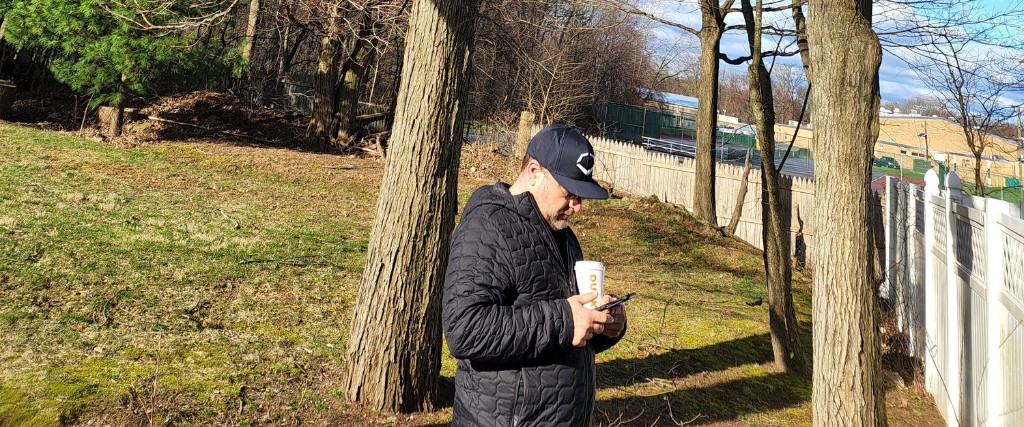
A Licensed Tree Expert conducts a professional assessment during the optimal early spring window when bronze birch borer damage evaluation is most accurate before adult emergence.
Get Ahead of Bronze Birch Borer This Spring
Bronze birch borer poses a serious threat to Bergen County’s valuable birch trees, but early spring assessment provides a strategic advantage for protection. Professional evaluation during
this optimal window allows Licensed Tree Experts to accurately assess damage, develop effective treatment plans, and preserve your landscape investment.
Don’t wait until summer emergence reveals the extent of the damage. By then, treatment options may be limited. The team at Aspen Tree is ready to treat your birches and help keep them healthy and standing for years to come. Call us at 201-939-8733 or request a quote online for a birch tree assessment and customized treatment plan today.