When winter storms strike Northern New Jersey, the aftermath often includes significant tree damage to homes and property. What many homeowners don’t realize is that the sooner you document and file your claim, the more likely you are to receive a fair insurance payout.
Insurance claims are often denied because of insufficient documentation or working with contractors who lack proper credentials. If you live in Essex, Bergen, Passaic, or Morris counties and face storm-damaged or fallen trees, acting quickly and correctly can mean the difference between full coverage and significant out-of-pocket expenses.
Key Takeaways
- Document all tree damage immediately with date-stamped photos from multiple angles before any cleanup begins.
- Contact your insurance company within 24 hours, even on weekends or holidays.
- Only use NJ Licensed Tree Experts for emergency work to avoid potential claim complications.
- Keep all debris on site until the insurance adjuster completes their inspection, unless it presents an immediate safety hazard.
What Should You Do in the First 24 Hours After a Fallen Tree?
The first 24 hours after storm damage are critical for establishing a successful insurance claim. When winter storms strike areas with mature trees, like Cedar Grove and Upper Montclair, proper documentation becomes your first priority. The large oaks and maples in these established neighborhoods are particularly vulnerable to ice loading and wind damage.
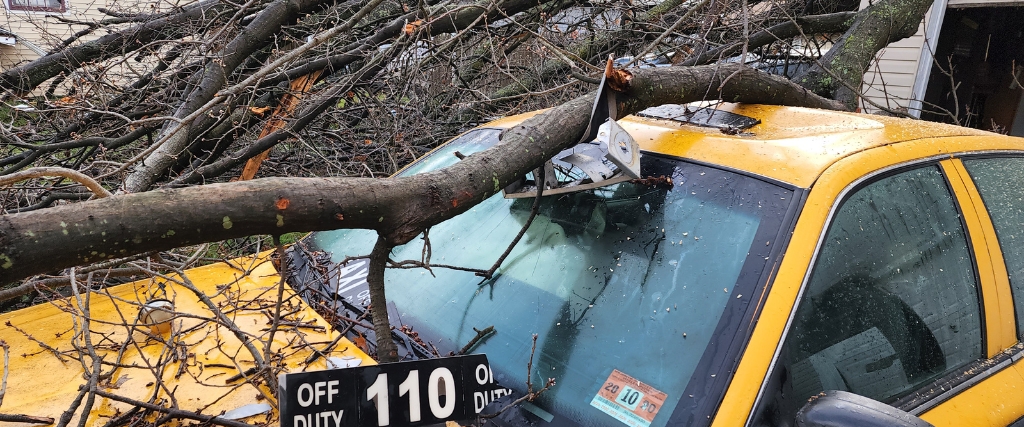
Proper documentation of storm damage is essential for insurance claims. This fallen tree on a vehicle shows clear damage that should be photographed from multiple angles.
What Photos Do Insurance Adjusters Need for Tree Damage Claims?
Insurance adjusters require specific visual documentation to process your claim effectively. According to the Insurance Information Institute, thorough photo documentation is crucial for property damage claims.
Required photos include:
- Wide-angle shots showing the entire damaged tree and affected property
- Close-up images of specific damage points (where the tree contacted structures)
- Photos from multiple angles (minimum of 4 different perspectives)
- Images showing the tree’s root system if uprooted
- Pictures of any visible decay or pre-existing conditions
- Documentation of any utility lines affected
- Date and time-stamped images (most smartphones do this automatically)
How Quickly Must You Contact Your Insurance Company After Storm Damage?
You must report storm damage within 24 hours to maximize your claim success. The National Association of Insurance Commissioners advises prompt communication and thorough documentation.
Follow this contact protocol:
- Report damage within 24 hours, even on weekends or holidays (most major insurers have 24/7 claim reporting)
- Use your insurer’s mobile app for the fastest processing
- Get a claim number immediately and record representative names
- Ask specifically about emergency tree removal authorization procedures
- Request written authorization before proceeding with any work
Can You Remove Dangerous Trees Before the Insurance Adjuster Arrives?
Yes, you can remove dangerous trees before the adjuster inspection, but only with proper authorization and documentation. When safety is at risk, particularly in densely populated neighborhoods, follow these steps:
- Call your insurance company first and request emergency authorization
- Document extensively with video and photos before any work begins
- Work only with a Licensed Tree Expert who understands insurance requirements
- Have the contractor document each removal step with photos
- Keep all debris on site for adjuster inspection unless absolutely impossible
PRO TIP: Review our guide on recognizing signs of a hazardous tree in New Jersey to understand what constitutes a true emergency.
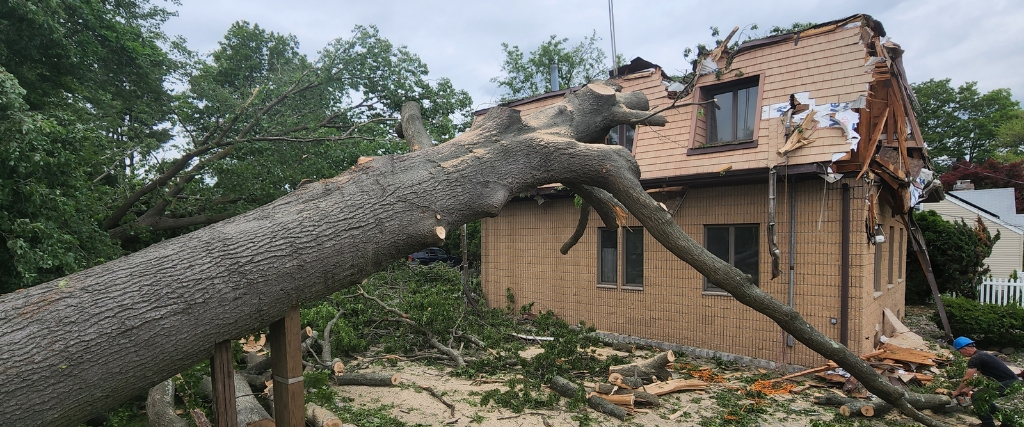
Severe storm damage like this fallen oak requires immediate professional assessment. Aspen Tree Service’s Licensed Tree Experts can provide the documentation needed for maximum insurance coverage.
What Does Homeowners Insurance Cover for Tree Damage After Winter Storms?
Standard homeowners’ insurance covers tree removal under specific conditions, but coverage varies significantly between policies. Insurance policies in Northern New Jersey have specific nuances regarding winter tree damage that directly impact claim outcomes.
Insurance typically covers tree removal when:
- The tree damages an insured structure (home, garage, fence)
- The tree blocks the driveway or handicap access
- Damage resulted from covered perils (storm, wind, ice, but not disease or neglect)
Coverage amounts typically range from $500-$1,000 per event for standard policies, though premium policies may offer higher limits. Key factors affecting coverage include your specific policy terms, whether structures were damaged, the cause of failure, and emergency service costs.
WARNING: Be aware that New Jersey tree removal regulations apply even in emergency situations.
Why Should You Only Use Licensed Tree Experts for Insurance Claims?
Working with New Jersey Licensed Tree Experts is critical for successful insurance claims and avoiding complications. The New Jersey Board of Tree Experts establishes licensing requirements that ensure proper training and qualifications essential for insurance work.
Licensed professionals provide crucial advantages:
- Understanding of insurance documentation requirements
- Ability to provide technically accurate damage assessments
- Professional liability insurance that protects homeowners during claims
- Compliance with state regulations and municipal permit requirements
Choosing reputable tree service companies ensures you receive proper documentation for your claim.
What Documentation Must Your Contractor Provide for Insurance Claims?
Licensed contractors must provide comprehensive documentation to support your insurance claim. According to United Policyholders, qualified contractors provide:
- Detailed written damage assessment with professional opinion on the failure cause
- Itemized estimate separating emergency services from standard removal costs
- Complete photographic documentation of work performed
- Copies of all required municipal permits
- Proof of licensing and insurance coverage
“Working with licensed professionals helps Northern New Jersey homeowners navigate insurance claims efficiently while ensuring compliance with state regulations.” – Casey Walentowicz, Licensed Tree Expert at Aspen Tree
What Is the Timeline for Processing Tree Damage Insurance Claims?
Insurance claims typically follow a predictable timeline, though processing speed varies based on claim complexity. Understanding these timeframes helps set realistic expectations and ensures you meet all requirements:
| Timeframe | Action Required | Responsible Party |
|---|---|---|
| 0-24 Hours After Damage | Document Damage, Report Claim, Secure Property | Homeowner |
| 24-72 Hours | Adjuster Contact, Emergency Work Authorization | Insurance Company |
| 3-10 Days | On-Site Adjuster Inspection | Insurance Adjuster |
| 7-14 Days | Initial Claim Decision | Insurance Company |
| 14-30 Days | Claim Payment Processing | Insurance Company |
| 30-60 Days | Appeals Process (If Needed) | Homeowner & Insurance Company |
The New Jersey Department of Banking and Insurance notes that timelines may vary based on claim complexity and volume following major weather events.
Many municipalities require permits even for emergency tree work, though expedited processes often exist.
How Can Preventive Tree Care Impact Your Insurance Coverage?
Proactive tree care significantly reduces both storm damage likelihood and improves insurance coverage outcomes. Documented maintenance history can strengthen your position during claims processing.
Preventive measures that benefit insurance claims include:
- Regular maintenance that identifies potential hazards before damage occurs
- Professional pruning that reduces ice and wind damage vulnerability
- Documented tree health treatments that establish maintenance history
- Pre-storm assessment records that provide valuable documentation
Before winter arrives, consider scheduling a fall tree risk assessment to identify potential hazards before they become insurance emergencies. Neighborhoods with extensive mature tree canopies benefit most from preventive care programs that document tree health over time.
Frequently Asked Questions About Fallen Tree Insurance Claims
If my neighbor’s tree falls on my property, whose insurance covers it?
Your homeowners’ insurance typically covers damage when a neighbor’s tree falls on your property. However, if negligence can be proven (such as documented warnings about hazardous conditions), liability may shift to the tree owner.
Does insurance cover tree removal if no structures were damaged?
Coverage for tree removal without structural damage is typically limited or excluded. Some premium policies may include additional landscape restoration coverage, so check your specific policy terms.
Do I need permits for emergency tree removal, and how do I navigate municipal requirements?
Most municipalities require permits even for emergency work, though expedited processes exist. Licensed Tree Experts can help navigate permit requirements, including specific protocols established by local Shade Tree Commissions for storm emergencies.
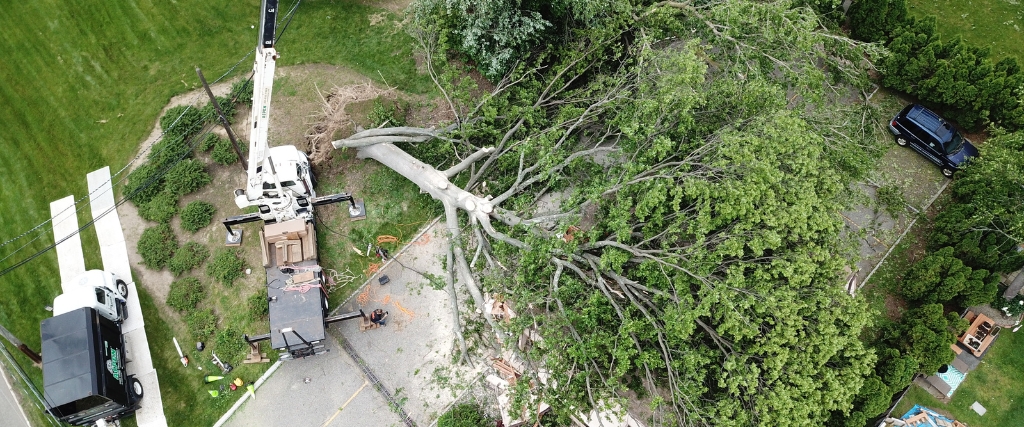
Professional emergency tree removal requires specialized equipment and Licensed Tree Experts. Aspen Tree Service’s comprehensive approach ensures safe removal and proper insurance documentation.
Don’t Wait Until After the Storm – Get Expert Tree Care Today
Winter storms in Northern New Jersey can strike with little warning, leaving homeowners with dangerous situations and complex insurance processes. The difference between approved and denied claims often comes down to proper documentation and working with qualified professionals.
Aspen Tree Service has served the region since 1986 with Licensed Tree Experts who understand both emergency tree work technicalities and insurance documentation requirements. Our team helps you prepare before storm season and respond quickly when damage occurs.
For residents concerned about winter storm preparedness, contact Aspen Tree Service at 201-939-8733 or request a quote online.