If your tree keeps getting fertilized but still looks thin, pale, or stressed year after year, the problem may not be a lack of nutrients. In many northern New Jersey landscapes, trees struggle because soil conditions prevent roots from properly accessing what’s already in the ground.
That’s why professional arborists test the soil before recommending fertilizer treatments. A soil test helps determine whether a tree actually needs nutrients, whether the soil chemistry is interfering with uptake, and what kind of treatment will actually help.
Key Takeaways
- Soil testing reveals pH, nutrient levels, and deficiencies—the only way to know what your trees actually need before spending money on fertilizer.
- Northern New Jersey soils often run alkaline from concrete and road salt runoff, which locks out nutrients even when fertilizer is applied at full rate.
- New Jersey law prohibits certified applicators from applying phosphorus without soil test data confirming a deficiency—making testing a legal requirement, not just a best practice.
- Trees growing within regularly maintained lawns may already be receiving adequate nutrients through turf programs, and adding more creates imbalance rather than health.
- Aspen’s approach follows IPM principles: diagnose first, treat second—never the other way around.
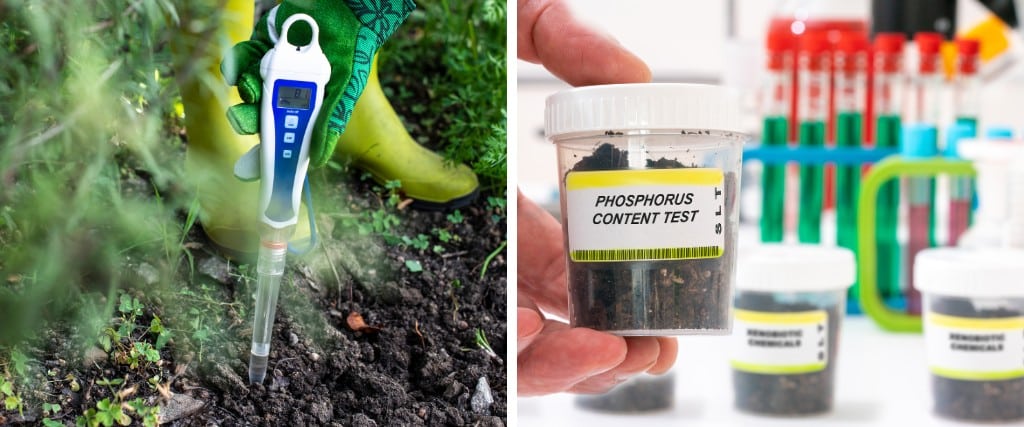
Soil pH testing and phosphorus content analysis are both required steps before a certified NJ applicator can recommend a fertilization program.
What Does a Soil Test Tell You About Your Trees?
A soil test reveals the chemical conditions that determine whether your trees can absorb nutrients at all.
Whether Your Tree Can Access Nutrients
A soil test measures pH, which tells arborists how acidic or alkaline the soil is. That matters because soil pH directly affects how easily tree roots can absorb nutrients.
In many northern New Jersey landscapes, soils gradually become more alkaline from concrete runoff, masonry materials, and winter salt exposure. As pH rises, certain nutrients—especially iron and manganese—become harder for roots to access even when they’re already present in the soil.
That’s why a tree can continue showing yellowing leaves, pale growth, or canopy thinning despite repeated fertilization. The nutrients may already be there, but the roots can’t effectively use them until the soil chemistry is corrected.
Which Nutrients Are Present in the Soil
A complete soil test also measures the nutrients trees rely on for growth, stress resistance, and root development, including:
- Macronutrients like nitrogen, phosphorus, and potassium
- Secondary nutrients like calcium, magnesium, and sulfur
- Micronutrients like iron, manganese, and zinc
These results help arborists determine whether a tree is truly deficient or whether the issue is tied to soil chemistry preventing uptake. Without testing, fertilization becomes guesswork.
What Soil Testing Can’t Diagnose
Soil tests don’t evaluate structure, so the following won’t appear in nutrient numbers and make fertilization as ineffective as a pH imbalance:
- Compaction
- Drainage problems
- Root zone disruption
If the problem is physical instead of chemical, applying fertilizer addresses the completely wrong issue. Knowing the common soil problems in northern New Jersey that affect tree health requires a different assessment along with soil chemistry data.
What Happens If You Fertilize Trees Without a Soil Test?
Fertilizing without a soil test means applying nutrients without knowing if the tree can use them, meaning the outcome is usually wasted money or active harm. The three most common problems include:
- Over-Application of Nitrogen: When nitrogen pushes rapid, excessive growth, trees produce large amounts of soft tissue that attracts aphids and boring insects. Unlike an annual plant, a tree carries that damage forward for years.
- Unnecessary Phosphorus Application: When phosphorus levels are already adequate, applying more doesn’t help the tree. It runs off into local waterways, a water quality issue regulators take seriously.
- Fertilizing Trees That Don’t Need It: Trees growing within regularly maintained lawns often already receive substantial nitrogen through turf programs. A soil test frequently shows these trees are nutrient-sufficient; adding a dedicated tree fertilizer program on top creates imbalance rather than improved health.
Why Do Trees Struggle in Northern New Jersey Soils?
Urban and suburban soils throughout Essex County tend to test at pH levels above the preference of most shade trees and ornamentals. In North Caldwell, Cedar Grove, and surrounding communities, that shift is often caused by years of environmental buildup rather than a single issue.
Common contributors include:
- Concrete and Mortar Runoff: Foundation runoff and leaching from old mortar raise pH in soil adjacent to structures, a pattern common on mature, landscaped properties in North Caldwell and Cedar Grove.
- De-Icing Salt: Applied each winter to driveways and walkways, road salt alters soil chemistry year after year with no natural correction.
At elevated pH levels, iron and manganese become bound to soil particles in a form roots can’t access. The result is iron chlorosis—yellowing between leaf veins—even in soil that contains adequate iron by raw measurement. Applying more fertilizer doesn’t solve it; it adds more of what the tree still can’t use.
This is why one fertilizer program can’t apply to neighborhoods just a few blocks from each other. The northern NJ soil conditions that affect nutrient availability vary block by block, driven by construction history, drainage patterns, and years of accumulated inputs. The only way to know what’s happening in a specific yard is a soil test.
What Are the Signs a Tree Needs Fertilization?
Visual symptoms and growth patterns can point toward a nutrient problem, but they’re a starting point for a professional assessment and not a diagnosis on their own.
This can include:
- Slower-than-normal growth over two or more consecutive seasons
- Smaller-than-typical leaves or a sparse, thin canopy heading into summer
- Yellowing between leaf veins (chlorosis) that isn’t explained by pest activity or disease
- Twig dieback at branch tips without obvious structural or pest cause
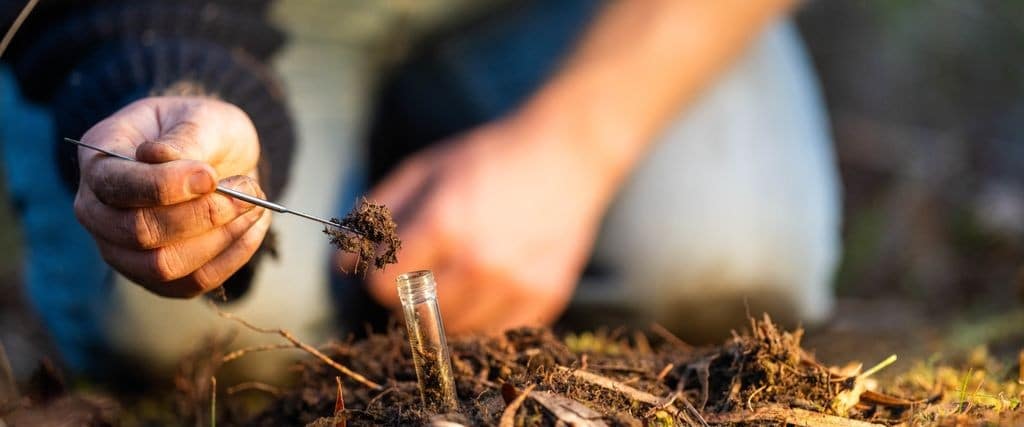
Soil sample collection from the root zone provides the data needed to make accurate fertilization decisions for trees on your property.
Does New Jersey Law Require a Soil Test Before Fertilizing?
For phosphorus application, yes. New Jersey’s Fertilizer Law prohibits certified applicators from applying phosphorus-containing fertilizer unless a soil test confirms a deficiency. The requirement is in place because phosphorus accumulates in soil and runs off into waterways, which contributes to the degradation of water quality across the state.
The credential that governs professional fertilizer application is ProFACT (Professional Fertilizer Applicator Certification and Training). It’s one that is held by Casey Walentowicz, which means every time Aspen recommends a fertilization program, it’s under the full scope of NJ’s certified applicator requirements.
Frequently Asked Questions About Soil Testing
Is it necessary to do a soil test before fertilizing trees?
In New Jersey, it’s more than best practice; it’s the law for certified applicators. State fertilizer regulations prohibit phosphorus application without soil test data confirming a deficiency. Legality aside, testing is the only way to know whether your trees actually need fertilizer and, if so, which nutrients to add.
What does a soil test tell you about your trees?
A soil test reveals pH, macronutrients (nitrogen, phosphorus, potassium), secondary nutrients, and micronutrients. It also shows whether your soil’s pH is in the right range for nutrient absorption.
What happens if you fertilize trees without a soil test?
If you fertilize trees without a soil test first, you risk applying nutrients the tree doesn’t need. This can cause excessive weak growth, attract pests, or create nutrient runoff into waterways. In northern NJ, where soils often run alkaline, you may also be adding fertilizer that the tree physically can’t absorb.
How often should you test your soil for tree health?
For most residential properties, a soil test every three to five years is good unless visible symptoms suggest a problem. Trees showing signs of stress, decline, or unusual leaf color may warrant more frequent testing as part of an ongoing plant health care program.
Do my trees need fertilizer if my lawn is already fertilized?
Sometimes. Trees in regularly fertilized lawns may receive some nutrients from turf treatments, but lawn grass also competes with tree roots for water and nutrient uptake.
A soil test helps determine whether the tree is actually deficient, whether nutrients are accessible at the root level, and whether additional fertilization would help or simply add unnecessary nutrients to the soil.
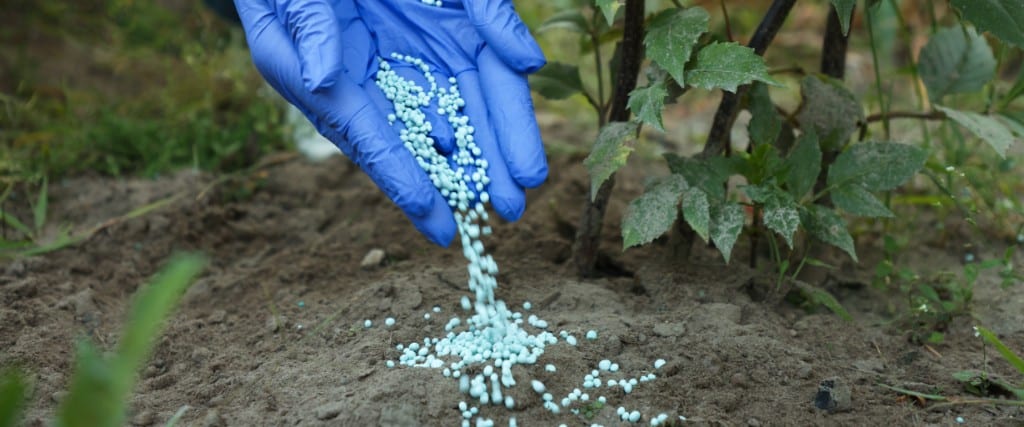
Applying granular fertilizer without soil test data risks over-application, which can stress trees and contribute to nutrient runoff into local waterways.
Call Aspen to Test Your Soil Before Fertilizing Trees
In northern NJ, where soil chemistry is shaped by decades of construction runoff and road salt, acting on the impulse to fertilize in the spring without soil data tends to mean spending money on fertilizer your trees can’t use or applying it when they don’t need it.
Aspen’s IPM approach applies the same logic to every fertilization decision: if your trees aren’t performing as expected, the right first step isn’t a fertilizer program; it’s getting to the bottom of what’s actually in your soil. Call Aspen Tree Service at 201-939-8733 today to schedule a soil test and consultation before committing to any fertilization program.