In Northern New Jersey, mature trees are carrying more pressure than they were a decade ago. Beech leaf disease has been spreading through Bergen, Essex, Passaic, and Morris counties since 2020. Oak wilt is closing in from surrounding states. And trees under prolonged stress can take an entire season to show visible symptoms, which means damage can build up for a year before surfacing.
A professional health assessment provides a clear picture of what’s happening before a condition that’s still manageable becomes an expensive emergency. Many of the area’s most serious conditions, like early-stage beech leaf disease and oak wilt in white oaks, can be managed or slowed with early intervention. For many homeowners throughout the region, that window’s open right now.
Key Takeaways
- A professional tree health assessment evaluates the canopy, trunk, root zone, and site conditions to identify health threats, structural risks, and soil problems before they become costly emergencies.
- Northern New Jersey homeowners should schedule an assessment every one to three years for healthy mature trees and immediately after any storm, defoliation event, or visible decline.
- In New Jersey, only a Licensed Tree Expert is legally authorized to diagnose tree health problems and develop a pest or disease treatment plan.
- An assessment produces a written arborist report with specific findings and treatment recommendations.
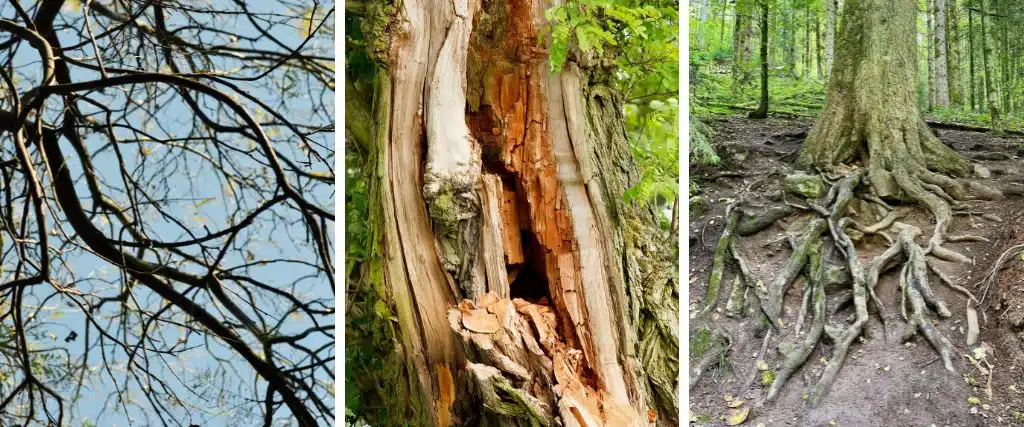
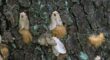
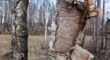
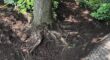
Common warning signs of a hazardous tree that arborists look for during an assessment include canopy dieback (left), trunk decay (center), and root zone conditions (right).
What Does a Professional Tree Health Assessment Include?
A professional tree health assessment is a systematic evaluation of the canopy, trunk, bark, and root zone as well as the general site conditions. Every zone is different, and an in-depth assessment combines findings across each to build an accurate diagnosis.
Canopy Evaluation
The canopy tends to be where health problems are first visually visible. An arborist will evaluate leaf color, density, and size relative to what’s standard for the species, looking for:
- Premature Leaf Drop: Leaves falling well before normal autumn timing, often in mid-summer, which can signal stress, disease, or root problems.
- Marginal Browning: Browning or scorching along the leaf edges while the center stays green, often pointing to drought stress, root damage, or vascular issues.
- Dieback: Dead branch tips that progress inward toward the trunk, frequently starting in the upper canopy, indicating the tree is losing the ability to support its outermost growth.
- Dead or Declining Branches: A noticeable increase in bare or failing branches from one season to the next, especially when clustered in one area of the crown.
- Crown Thinning or Asymmetry: Sparse foliage or an uneven canopy that seems minor from the ground but can indicate deeper problems like root damage, disease, or pest pressure.
Catching these patterns early is the difference between a proactive and reactive assessment and understanding why DIY diagnosis can be a costly mistake.
Trunk and Bark Assessment
The trunk is the main driver of structural integrity. An arborist will look for:
- Cracks: Vertical cracks, seams, or splits in the trunk that may indicate structural weakness.
- Cavities: Open hollows or voids in the trunk where wood has decayed or been lost. These don’t immediately warrant removal; they need context (size, location, biology) to assess their degree of structural risk.
- Included Bark: Bark trapped between co-dominant stems, creating a weak union that is more prone to failure.
- Decay Indicators: Soft or crumbly wood, dead sections of bark, hollow sounds when tapped, or areas where the trunk appears sunken or deteriorated.
- Fungal Fruiting Bodies: Mushrooms or conks growing on the trunk, root flare, or at the base of the tree, which may indicate internal decay. Conks at the base are a late-stage signal that internal damage is often far more extensive than the exterior suggests.
- Bark Abnormalities: Peeling bark, missing bark, unusual swelling, or areas where bark texture and color differ from surrounding tissue.
- Cankers: Sunken, cracked, or discolored patches of bark caused by disease or injury.
- Oozing Sap: Sap leaking from wounds, cracks, insect entry points, or areas of disease activity.
Root Zone Inspection
Far too often, what’s going on at and below the soil line is the part of tree health that gets overlooked. An arborist will do the following to determine what’s stressing the tree from the ground up:
- Check root flare visibility
- Look for girdling roots
- Assess soil compaction, grade changes, and drainage issues
When burial or substantial compaction is suspected, root collar excavation with air spading may be recommended to precisely diagnose what’s happening below grade. Aspen performs root collar excavation and soil compaction relief as part of our preservation services.
Site Conditions
Trees don’t exist in isolation, and the following all affect how a tree functions and responds to stress:
- Drainage patterns
- Proximity to structures
- Soil pH
- History of nearby construction or grade changes
Urban and suburban NJ soils are typically compacted or nutrient-poor from years of development, which is a factor that can cause chronic stress symptoms that mimic pest or disease pressure. Knowing how soil conditions affect tree health in your specific area helps an arborist identify a tree with a biological problem and one that’s just starved for its preferred conditions.
When Should You Schedule a Tree Health Assessment?
For healthy mature trees, arborists typically recommend a professional assessment every one to three years. That said, certain events can warrant an assessment regardless of when the last one was.
On a Regular Cycle
Schedule more frequently for trees with:
- Known health issues
- High-value placement near structures
- Species under elevated regional disease pressure
Oaks, beeches, birch, and ash all have certain threats in Northern New Jersey that make yearly attention the standard.
After a Storm
Structural damage from wind loading isn’t always noticeable from the ground. A crack or cavity that went undetected through one winter becomes a bigger liability going into the next. A post-storm assessment before the next storm season is a wise next step.
After Defoliation
Trees that lose their canopy to spongy moth or other caterpillars use stored energy reserves to releaf, which depletes the defenses they need to resist secondary pests and disease. That secondary stress window, when two-lined chestnut borer pressure and fungal pathogens can move in, is when a professional evaluation is the most valuable.
After Prolonged Stress
Some of the most damaging conditions build slowly instead of showing up in a single event. Trees under prolonged drought stress can take an entire season to show symptoms, and construction or grading near the root zone can disturb a tree’s stability and root function in ways that don’t surface immediately.
The range of stressors that warrant an assessment is broad—including soil compaction, grade changes, and root severance from nearby projects.
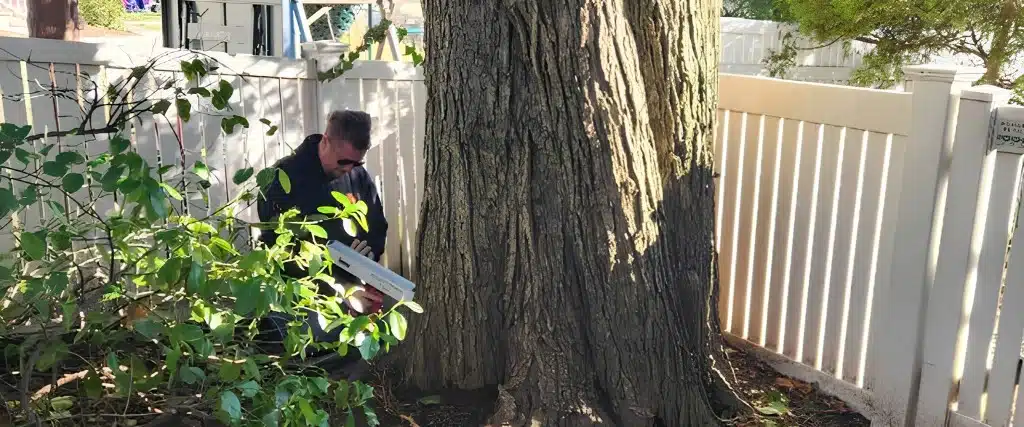
Advanced diagnostic tools allow arborists to detect internal decay that isn’t visible from the exterior.
Who Is Qualified to Perform a Tree Health Assessment in New Jersey?
In New Jersey, the credential that matters most for a tree health assessment isn’t one most homeowners recognize.
ISA Certified Arborist
The ISA Certified Arborist credential is commonly recognized and very meaningful, as it demonstrates real knowledge of tree biology, care practices, and professional standards. However, this certification alone doesn’t legally authorize the following in New Jersey:
- Diagnosis
- Treatment recommendations
- Pesticide application
A company completely staffed with ISA Certified Arborists can tell you a tree looks stressed, but cannot legally tell you what’s wrong or prescribe a course of treatment.
NJ Licensed Tree Expert (LTE)
The LTE is a state-issued credential that’s administered by the NJ Board of Tree Experts that legally authorizes the holder to:
- Diagnose tree health problems
- Develop treatment plans
- Apply or supervise pesticide applications under an integrated pest management (IPM) framework
Our lead arborist, Casey Walentowicz, holds LTE #689, and the difference between that credential and a standard inspection is something to know.
Tree Risk Assessment Qualification (TRAQ)
Our lead arborist also holds the TRAQ, which is an ISA credential that authorizes formal tree risk evaluation and written assessment reporting. It requires a two-day course, a 100-question exam, and a live performance assessment. The combination of LTE and TRAQ means Aspen can:
- Diagnose what’s wrong
- Produce a formal risk report
- Carry out a legally authorized treatment plan
Before you hire any tree service for a health assessment in New Jersey, you should verify credentials through the NJ Board of Tree Experts.
What Happens After a Tree Health Assessment?
After Aspen conducts a tree health assessment, you get a written arborist report, which is a documented record of findings organized by zone, with risk classifications where applicable.
Written Arborist Report
The report documents what was observed in canopy, trunk, root zone, and site and assigns risk classifications to conditions that call for it. In addition to its diagnostic value, the report serves as a property record with several practical uses:
- Support homeowner’s insurance claims following storm damage
- Satisfy documentation requirements for municipal permit applications
- Provide evidence in neighbor or HOA disputes involving shared trees
- Serve as disclosure documentation in a pre-sale transaction
Aspen’s arborist consultation and reporting services are designed to produce reports that hold up in every context.
Treatment Recommendations
Findings from the assessment turn into a specific plan of action. Depending on what’s uncovered, recommendations may include:
- ANSI A300-compliant pruning to address structural defects or dead wood, which is the standard that ensures pruning helps a tree instead of encouraging further decline.
- Cabling or bracing for structural support where dynamic loading is a concern can help reduce the risk of structural failure.
- Soil treatment or deep root fertilization to address compaction and nutrient deficiencies, supported by Aspen’s fertilization services.
- Pest and disease intervention developed under an IPM-based treatment plan, carried out through Aspen’s plant health care services.
An assessment doesn’t always lead to removal, as a lot of Northern New Jersey’s more serious conditions are treatable or manageable when caught early.
Consultation Fee
A professional tree health assessment is a paid consultation, which is different from a free estimate. A free estimate covers straightforward tree work (i.e.: removals, trims, and similar jobs), where the scope is clear from a quick look. A health assessment is a diagnostic service: the arborist evaluates the canopy, trunk, root zone, and site conditions, then documents the findings in a written report.
For on-site assessments, Aspen charges a consultation fee, confirmed at the time of scheduling, with a contract sent before the visit is booked.
Frequently Asked Questions About Professional Tree Health Assessments
Can I assess my tree’s health on my own?
You can spot early warning signs yourself, such as:
- Discolored leaves
- Dead branches
- Fungal growth at the base
However, you can’t legally diagnose the cause or prescribe treatment in New Jersey unless you’re a Licensed Tree Expert. Homeowners are well positioned to notice that something is wrong, but a professional is needed to determine what it is and what to do about it.
How much does a tree health assessment cost?
Costs vary based on the scope of the assessment and the number of trees involved. A tree health assessment is a paid diagnostic service rather than a free estimate, so it carries a consultation fee confirmed at the time of scheduling. Contact Aspen directly for current pricing.
What time of year is best for a tree health assessment?
A tree health assessment can be performed year-round, and the best timing depends on what you’re watching for. Growing-season assessments (spring through early fall) make foliage problems, pest activity, and disease symptoms easiest to spot, while the dormant season offers a clear view of branch structure and architecture once leaves have dropped.
What is the difference between a tree health assessment and a tree risk assessment?
A tree health assessment focuses on the biological condition of the tree, identifying:
- Disease
- Pest pressure
- Nutrient deficiencies
- Structural decline
A tree risk assessment evaluates the likelihood and consequences of tree failure using the ISA’s three-factor framework. A complete professional evaluation from a TRAQ-certified arborist generally covers both.
Why does it matter if my arborist holds the TRAQ credential?
TRAQ-qualified arborists are trained to evaluate tree risk using a standardized, defensible methodology, which matters most when the findings carry legal or financial weight. A formal risk report from a TRAQ holder is far more likely to hold up for an insurance claim, a permit application, or an HOA or neighbor dispute than a general opinion.
It’s the difference between someone saying a tree looks risky and someone documenting why, to a recognized professional standard.
Can a tree be saved after an assessment, or does it always need removal?
Removal is the exception, not the rule. Many of Northern New Jersey’s most serious conditions can be slowed or managed when caught early, including:
- Early-stage beech leaf disease
- Oak wilt in white oaks
- Wood-boring insect pressure
The value of the assessment lies in identifying the right response while options still exist, and early action almost always produces better outcomes than waiting.
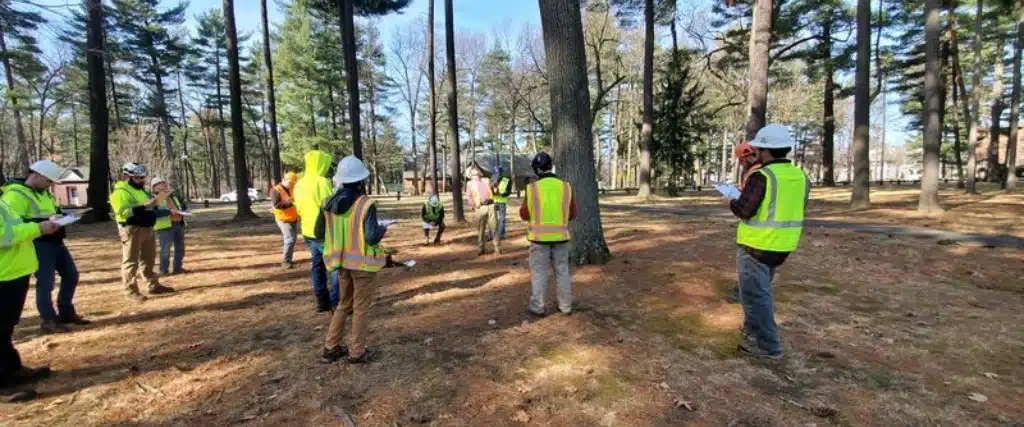
Earning the TRAQ credential involves two days of specialized training and a live performance assessment designed to validate an arborist’s tree risk evaluation skills.
Schedule a Professional Tree Health Assessment with Aspen Arborist & Tree Services
The earlier that issues like decay, disease, root damage, or structural defects are identified, the more options you typically have to manage them.
A professional tree health assessment gives you a clear picture of your trees’ condition, identifies potential risks, and helps you prioritize any recommended work. Whether you’re concerned about a specific tree or want a general evaluation of your whole property, Aspen’s combination of LTE authorization and TRAQ certification leads to a team that can diagnose the cause, document it, and carry out a legally authorized treatment plan.
Call Aspen at 201-939-8733 or contact Aspen Arborist & Tree Services online today to schedule a tree health assessment for your Northern New Jersey property.