
New Jersey has already experienced multiple stretches of dangerous heat this summer, with heat indices climbing well over 100 degrees in parts of the state. If your tree suddenly starts wilting, dropping leaves, or looking thin by mid- to late summer, heat stress is often the reason.
The damage doesn’t happen overnight. By the time those symptoms appear, your tree has usually been struggling for weeks. While one hot summer rarely causes permanent damage to a healthy, established tree, repeated years of extreme heat and drought weaken its natural defenses, making it more vulnerable to insects, disease, and branch failure.
Key Takeaways
- Summer heat stress can hit even a well-watered tree, so wilting does not always mean the tree needs more water.
- The bigger danger is not one hot week but a tree’s defenses eroding over repeated summers of heat and drought.
- Heat stress looks a lot like drought and disease, which makes an accurate at-home diagnosis unreliable.
- The sooner heat stress is identified, the better the chances of preventing long-term decline.
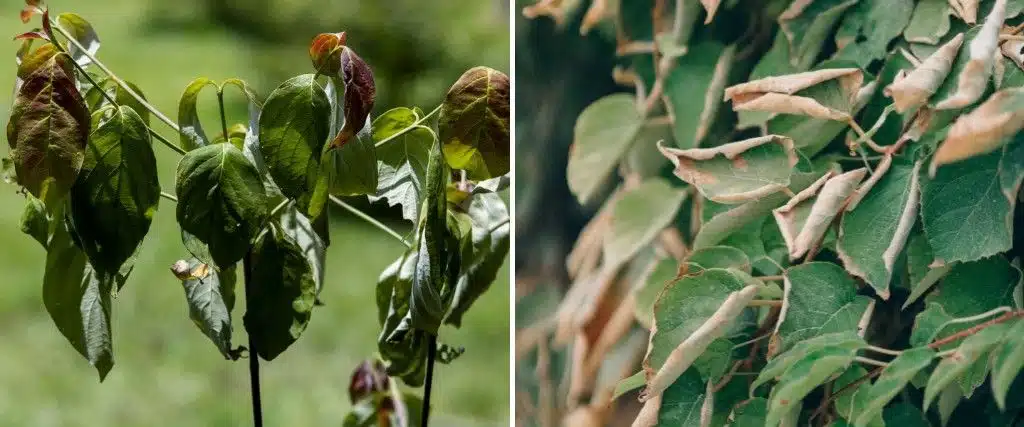
Curling leaves and scorched edges are often the first visible signs of heat stress in New Jersey trees.
Why Are Northern New Jersey Trees Vulnerable to Summer Heat?
Summer heat forces trees to lose water faster than their roots can replace it. During extended hot weather, even mature trees can struggle to keep up, especially if rainfall is spotty or heavy storms send water running off instead of soaking into the soil.
Three things happen during periods of extreme heat:
- Transpiration Overload : A tree cools itself by releasing water as vapor through its leaves, and extreme heat drains it faster than the roots can resupply.
- Self-Protection Attempts : To conserve moisture, the tree closes the pores in its leaves, which also slows the food-making it needs.
- Runoff : Fast-moving NJ thunderstorms often run off rather than reaching the root zone, so a tree can stay moisture-stressed even after a storm.
Why Nearby Trees Can Show Different Symptoms
Two trees on the same block can react to the same heat quite differently because of the ridge-and-valley terrain of the Passaic County corridor, which is why an assessment evaluates every tree on its own:
- Elevation and Slope : A tree at the bottom of a Nutley slope may hold soil moisture longer than one on a dry, west-facing rise in Montclair.
- Hardscape Heat : The pavement and driveways in Bloomfield radiate heat that warms the root zone even further.
What Does Summer Heat Do to a Tree Over Time?
As time passes, repeated summers of heat and drought draw down the energy reserves a tree needs to defend itself and regrow. Just one stressful summer is a much different problem than numerous stressful summers in a row.
Whether a tree bounces back is determined by how many hard summers come in a row:
- Single Season : A healthy, established tree usually shrugs off one rough summer and recovers the next year.
- Back-to-Back Summers : The tree spends its stored energy on survival instead of growth and defense, and those reserves never fully recover before the next period of stress.
Over several years, that repeated strain gradually weakens the tree. It becomes more vulnerable to insects, disease, dead branches, and other signs of decline. A Certified Arborist can often spot these changes long before they become obvious to a homeowner, giving you a chance to address problems before they become more serious.
How Do I Know If Summer Stress Is Serious?
You can’t always differentiate between serious stress and routine summer wear by visuals alone, but a few signs are worth keeping an eye on, such as:
- Wilting or drooping that does not recover overnight
- Leaves browning or scorching along the edges, or dropping earlier than usual
- A thinning canopy, or leaves noticeably smaller than last year
- Dieback that starts in the upper crown
- Bark that looks cracked, sunken, or discolored
How Can You Tell if It’s Heat Stress or Something Else?
Unfortunately, you usually can’t tell from the symptoms alone. Heat stress shares many of the same warning signs as drought, root damage, insect activity, and certain tree diseases. That’s why it’s important to look at the whole picture rather than relying on one symptom.
Things an arborist considers include:
- Recent Weather Patterns: Has the area experienced prolonged heat, drought, or both? Heat stress is more likely after extended periods of high temperatures.
- Where the Symptoms Appear: Damage affecting the entire canopy often points to a different problem than symptoms limited to one branch or one side of the tree.
- The Tree’s Growing Conditions: Soil type, drainage, sun exposure, construction damage, and nearby pavement all influence how a tree responds to heat.
- Signs of Other Problems: An arborist also looks for evidence of insects, disease, root damage, or decay that could be causing similar symptoms.
No single symptom confirms heat stress. An ISA Certified Arborist and New Jersey Licensed Tree Expert can determine whether heat is the primary cause or whether another issue needs to be addressed before recommending treatment.
Can Proactive Care Protect My Trees Before Problems Show Up?
When done correctly, you can lower a tree’s summer stress with a few habits. During a dry stretch:
- Water deep and infrequent, not shallow and often. Soak the top 6 inches of the root zone, from the trunk out past the dripline where most feeder roots live.
- Water in the morning. Midday watering can lose as much as 40% to evaporation.
- Spread two to four inches of organic mulch over the root zone, keeping it off the trunk. Avoid volcano-style mounding against the bark.
- Do not fertilize a heat- or drought-stressed tree. High-nitrogen feed forces new growth the tree cannot support.
Frequently Asked Questions About Heat-Stressed Trees
Can trees recover from heat stress?
Usually, if the stress is caught early. A healthy tree tends to rebound from one rough summer, but several in a row can leave it only able to stabilize rather than fully recover. The earlier the decline is caught, the better the odds.
How do I tell stress apart from disease or pests?
Often you cannot by sight alone, because the symptoms look nearly identical. A Licensed Tree Expert reads the finer clues, such as borer exit holes or fungal cankers, to pin down the cause and check whether pests have already moved in.
How often should I water trees during a summer drought?
Established trees generally want at least 1 inch of water every week to 10 days when rain is short, applied deep and infrequent rather than shallow and daily. Large, well-rooted trees can often go two to three weeks between waterings. Water in the morning, and check the soil first, since a wilting tree is not always a dry one.
Should I fertilize a stressed tree in summer?
No. Fertilizing a heat-stressed tree encourages new growth at a time when the tree is focused on survival, not growth. That extra demand can make the stress worse. Wait until the tree has recovered, and only fertilize if a soil test or arborist recommends it.
Is an arborist consultation the same as a free quote?
No. A free quote covers straightforward work like a removal or a trim, while a paid arborist assessment is a diagnostic service that produces a written report on your tree’s condition.
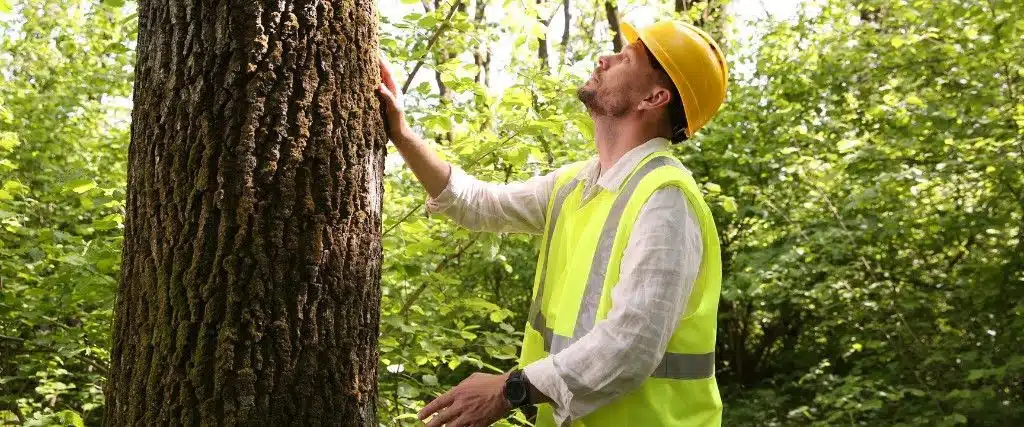
A professional tree health assessment identifies the cause that look-alike symptoms can hide.
Protect Your Trees Before Summer Stress Leads to Bigger Problems
If your tree is showing signs of heat stress, don’t wait for the damage to get worse. Schedule a professional assessment or call 201-720-5863 to speak with Aspen’s tree care team. An ISA Certified Arborist and New Jersey Licensed Tree Expert will identify what’s causing the symptoms and recommend the right treatment to help protect your tree’s long-term health.