In Cedar Grove, Verona, North Caldwell, and West Orange, Aspen Tree Service starts fall applications in late October and finishes before the ground freezes. Timing for tree fertilization in New Jersey also depends on the product, since high-nitrogen fertilizer can push tender new growth that winter will likely kill as the tree enters dormancy.
The window is important because trees need nutrients most in spring, and a late-fall application delivers its best results the following year. When a soil test shows a need, fertilization supports the vigor that helps a tree withstand certain insect and disease problems. A tree that misses the window has to wait for early spring.
Key Takeaways
- Aspen starts fall applications as early as the last days of October, finishes before the ground freezes, and recommends slow-release products in the fall.
- Late nitrogen can push tender new growth that winter kills.
- State lawn fertilizer law ends homeowner nitrogen and phosphorus applications on November 15th and professional applications on December 1st, which matters most when fertilizer goes on grass over a tree’s roots.
- Your next step depends on the date: schedule before mid-November for a fall application, or plan a spring application once winter sets in.
- Dormant oil only helps against the pests it actually controls, and a single spray may suppress armored scale by less than 30%, so diagnosis has to come first.
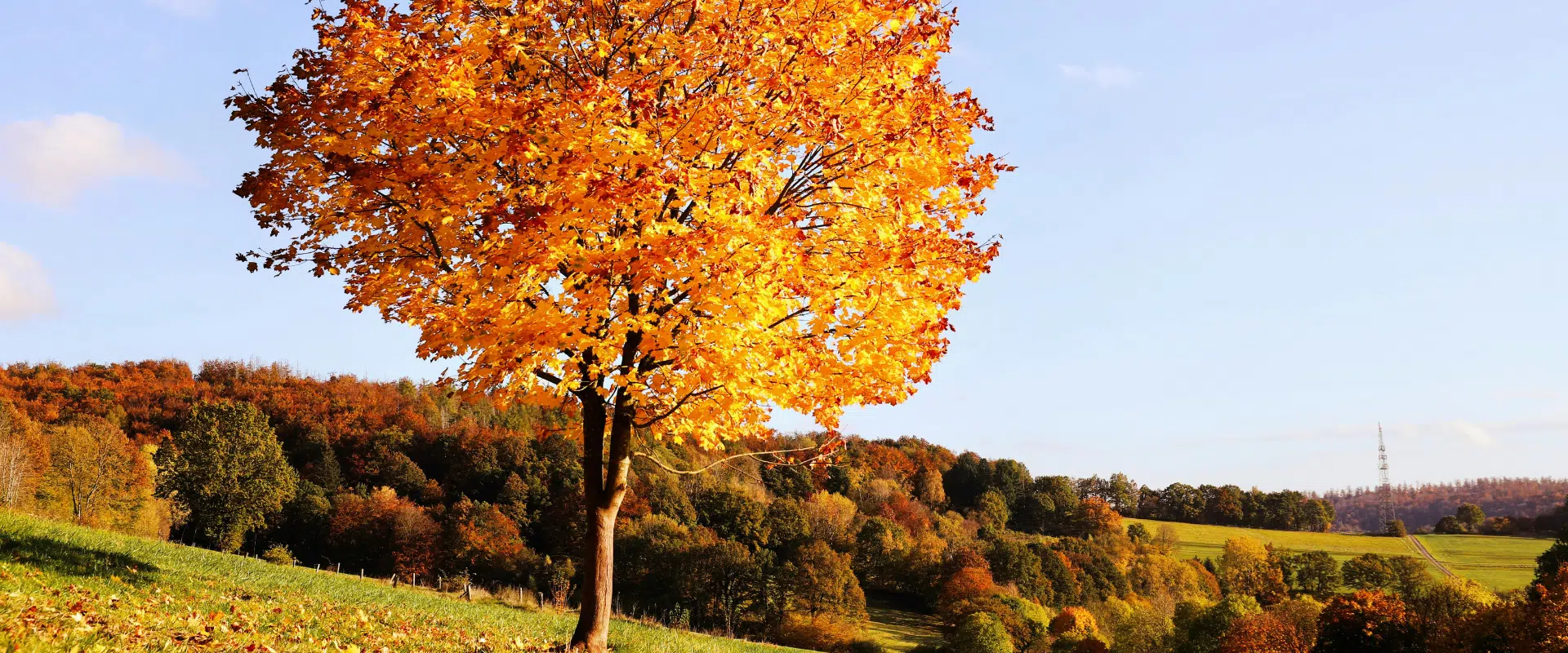
Late fall is a narrow window for tree fertilization in New Jersey, so timing matters.
Is It Too Late to Fertilize Trees in New Jersey This Fall?
Not necessarily. Aspen’s fall window runs from late October until the ground freezes. New Jersey’s lawn fertilizer law bars homeowners from applying nitrogen or phosphorus after November 15th and before March 1st. Although these rules apply to turf, they limit what you can do for a tree mainly when the fertilizer goes on the grass over its roots.
How Aspen Approaches a Fall Application
Aspen tailors every fall application to the specific needs of a tree, using practices like:
- Slow-Release Products: Aspen recommends them in the fall and avoids high-nitrogen products late in the season.
- Soil Aeration and Radial Mulching: Aspen pairs these with fertilization, since roots can absorb nutrients only if they can reach them.
- Soil Testing: Aspen begins with a soil test; background is in these guides on soil testing and tree health and northern New Jersey soil problems.
- Tree Health Assessment: Aspen assesses a tree that already looks stressed before adding anything.
When Should You Schedule Fall Tree Fertilization?
If you can, schedule the soil sample and application together before mid-November, the widest fall window. Your options change by date as follows:
- November 15th to December 1st: Ask Aspen whether a late-fall application makes sense for your trees, since professional applicators have until December 1st and soil conditions decide whether a visit can happen.
- After December 1st: Mulch your trees, compost fallen leaves (hot-compost any that show foliar fungus), and plan your spring fertilization with Aspen.
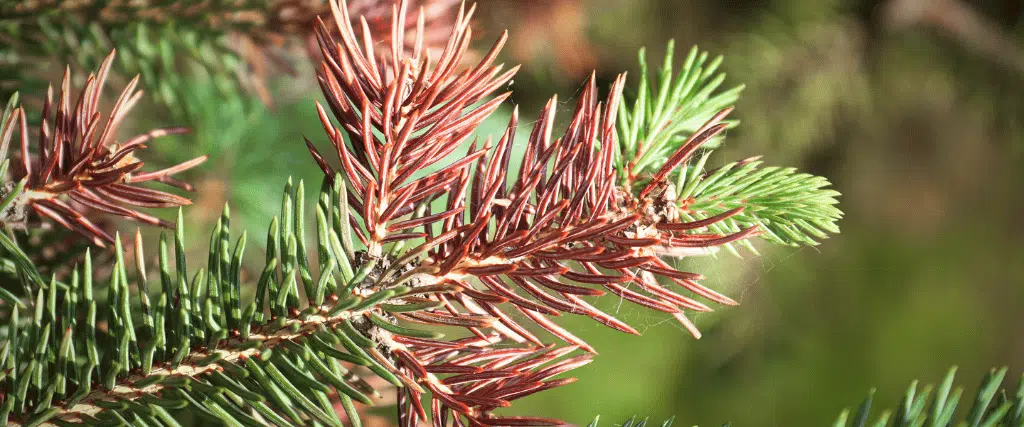
Mite damage often does not show until the following spring or summer, so a fall check can catch what you would otherwise miss.
Should You Use Dormant Oil on Your Trees in the Fall?
It depends on what’s living on your trees, since dormant oil is a horticultural oil that helps control overwintering insects and eggs but only works on the pests it targets. It’s a pesticide application that has plant-sensitivity and temperature limits, so it should be considered only after a diagnosis.
What Dormant Oil Controls
Dormant oil targets the following overwintering pests, and which you should look for depends on the kind of tree you have:
- Spruce Spider Mites on Conifers: Populations peak around November and finish laying overwintering eggs by December.
- Southern Red Spider Mites on Broadleaf Evergreens: These follow the same November peak and December egg-laying finish.
- Soft Scales: Oil controls these better than it controls armored scales.
Often, damage from the mites doesn’t show until the following spring or summer, so checking your trees in the fall can catch what you’d otherwise miss.
When Dormant Oil Is the Wrong Choice
Oil doesn’t control every overwintering pest, and it can also damage some plants. So be sure to check for these cases before treating:
- Armored Scale: A single spray may suppress it by less than 30%.
- Two-Spotted Spider Mites on Burning Bush: These overwinter as adults off the plant, so oil is not the right tool.
- Blue Spruce and Blue Juniper: Oil can strip the blue bloom.
- Stressed Hemlocks: Oil should not be used against woolly adelgid on hemlocks already under stress.
How to Correctly Apply Dormant Oil
Start with an insect and disease treatment assessment to confirm what’s on your trees and whether oil would help. After that, follow these guidelines regarding timing and conditions:
- Seasons: Late fall and late winter are both used, but late winter or early spring often gives better results.
- Two Rounds: Some landscapers apply in both seasons because one treatment rarely delivers 100% control.
- Conditions: Apply oil when temperatures will stay above 40°F for 24 hours, and follow the product label.
Frequently Asked Questions About Tree Fertilization
Does fertilizer help a tree recover from storm damage?
No. Nutrients do not repair structural damage, and broken or split limbs need an arborist’s evaluation. Aspen recommends scheduling a tree health assessment after any storm.
Do trees need water in winter?
Some do. Newly planted trees, evergreens, and trees in a dry winter may need water on milder days when the soil has thawed. Aspen’s guide to winter tree care in New Jersey has more.
What happens if a tree gets too much fertilizer?
Too much fertilizer can burn roots. Fertilizer that sits on the surface can also wash off into waterways as runoff.
Can I use lawn fertilizer around my trees?
Not as a substitute for a tree-specific program. Lawn fertilizer is not tailored to a tree’s needs, so read the label first and use this guide to fertilizer labels.
Who is allowed to diagnose and treat tree pests in New Jersey?
In New Jersey, only a Licensed Tree Expert can provide tree diagnosis and pest or disease treatment services for hire. Aspen explains the license in its guide to the New Jersey Licensed Tree Expert.
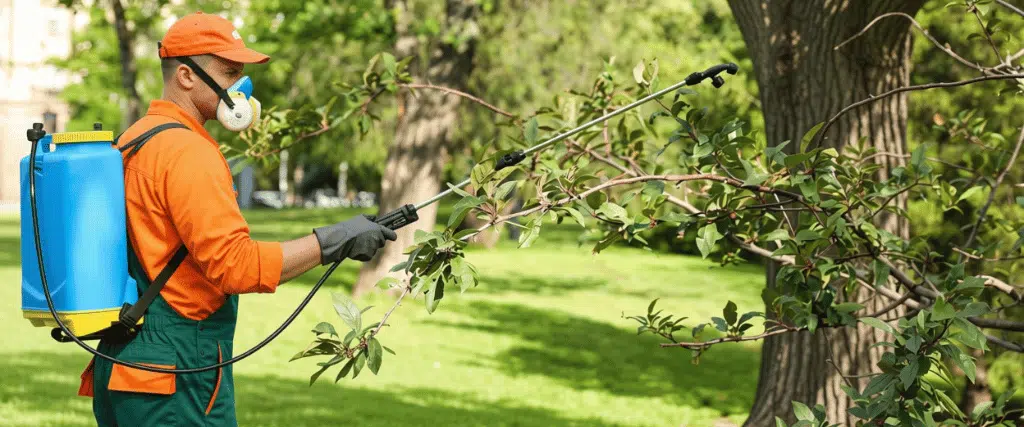
Dormant oil only works on the pests it targets, so a diagnosis should come before any spray.
Have the Experts at Aspen Tree Assess Your Trees
Aspen’s arborists can start with a tree health assessment so you know what’s affecting your tree before you use any fertilizer or oil. After that, schedule a fall or spring fertilization application, and add an insect and disease treatment assessment if you suspect mites or scale.