Severe thunderstorms regularly tear through New Jersey, toppling trees onto homes, vehicles, and roads. In some cases, fallen trees have also damaged NJ Transit tracks and overhead wires, disrupting rail service across the region. These storms are a reminder of just how much force mature trees can face, and why understanding a tree’s condition before severe weather arrives matters.
You can’t predict which tree will fail in the next storm, but a tree risk assessment can identify conditions that make failure more likely. Unlike a free estimate for pruning or removal, it’s a paid, in-depth evaluation of the tree’s condition, likelihood of failure, what could be affected if it does fail, and the potential consequences. That information helps homeowners make informed decisions about whether a tree can remain, needs additional care, or should be removed.
Key Takeaways
- A tree risk assessment provides a detailed evaluation of a tree’s condition and potential risk, going well beyond what’s covered in a standard estimate.
- Risk isn’t based on the tree’s condition alone; an arborist also considers what the tree or branch could hit and how serious the consequences would be if it failed.
- Most assessments begin with a thorough visual inspection, with specialized diagnostic tools used when more information is needed to understand what’s happening inside the tree or below ground.
- Aspen’s assessments are performed under TRAQ, ISA Certified Arborist, and NJ Licensed Tree Expert #689 credentials, qualifications not every tree company holds.
- Structural defects and insect or disease damage can compromise a tree’s stability long before it shows visible symptoms.
What Is a Tree Risk Assessment?
A tree risk assessment is a formal, structured evaluation of a tree’s condition, stability, and potential risk to people or property. Rather than looking only at whether a tree appears healthy, a credentialed arborist evaluates the entire tree, including the root zone, trunk, branch unions, canopy, signs of decay or structural weakness, and any conditions that could increase the likelihood of failure.
The arborist also considers the tree’s surroundings. A defect in a tree growing over an open area may carry a very different level of risk than the same defect in a tree over a home, driveway, playground, or other frequently occupied space. The assessment considers how likely the tree or a branch is to fail, how likely it is to strike a target if it does, and the potential consequences of that failure.
Those findings are documented in a written report with a risk rating and recommendations for managing the identified risk. Depending on what the arborist finds, that could mean continued monitoring, pruning or structural support, further testing, or removal. Ultimately, the assessment answers two important questions: How much risk does this tree currently pose, and what, if anything, should be done about it?
What’s the Difference Between a Tree Risk Assessment and an Estimate?
The biggest difference between a tree risk assessment and an estimate is what you’re asking the arborist to determine.
- A Free Tree Estimate: You’re asking, “What will it take and cost to perform this work?” If you want a tree removed, pruned, or otherwise serviced, the estimate provides the scope of work and price.
- A Tree Risk Assessment: You’re asking, “Does this tree pose an unacceptable level of risk, and how should that risk be managed?” You’re paying for the arborist’s evaluation and professional findings rather than a quote for a specific tree service.
A risk assessment may ultimately lead to pruning, structural support, monitoring, removal, or no immediate work at all. If additional care is recommended, Aspen’s professional consultation services can help determine the appropriate next step.

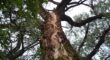
A visual tree risk assessment starts with a systematic inspection of the roots, trunk, branch unions, and canopy for conditions that could affect stability.
How Does a Professional Tree Risk Assessment Work?
A tree risk assessment typically begins with a visual inspection of the tree and its surroundings. The arborist looks for structural defects, decay, root concerns, and other conditions that could contribute to failure, then evaluates three factors together:
- Likelihood of Failure: How likely the tree or a specific branch is to fail within a defined period.
- Likelihood of Impact: How likely the tree or branch is to strike a person, structure, vehicle, or other target if it fails.
- Consequences of Failure: How serious the damage or injury could be if that target is struck.
This is why two trees with similar structural defects can receive different risk ratings. A cracked limb over an open area presents a different level of risk than the same defect over a driveway, home, or frequently used part of the yard.
If the visual assessment doesn’t provide enough information to determine the extent of a suspected defect, the arborist may recommend additional diagnostic testing to get a better understanding of what’s happening inside the tree or below ground.
When a Visual Check Isn’t Enough
Most of the time, assessments only need a full ground-level inspection, where the arborist identifies visible defects and assigns a written risk rating. When the visuals are ambiguous, two tools fill the gap: a resistograph drills a fine bit into the trunk and measures resistance (distinguishing solid wood from decay or hollow voids without guesswork), and ground-penetrating radar maps root-zone damage without excavation.
What Problems Can a Tree Risk Assessment Identify?
A tree risk assessment can identify structural defects, root problems, decay, and insect or disease damage that may affect a tree’s stability. During an assessment, an arborist may identify:
- Cracks and Splits: Cracks in the trunk, major limbs, or branch unions that can indicate structural weakness.
- Weak Branch Unions: Included bark, codominant stems, and other poorly attached unions that may be more susceptible to splitting.
- Dead or Hanging Branches: Large deadwood or broken limbs that have an increased likelihood of failure.
- Decay and Cavities: Deteriorated wood in the trunk or major branches that can reduce the amount of sound wood supporting the tree.
- Root and Root-Plate Problems: Damaged, decayed, severed, or compromised roots, along with soil lifting or movement that may indicate reduced stability.
- A New or Increasing Lean: A recent change in a tree’s position that may indicate movement in the root system or another structural concern.
- Previous Damage or Poor Structure: Old storm damage, pruning wounds, topping, or structural issues that can affect how the tree responds to wind and other loads.
- Insect or Disease Damage: Pest activity, disease, or fungal decay that damages roots, branches, bark, or wood and may weaken the tree over time.
Who Is Qualified to Perform a Tree Risk Assessment?
Not every tree company is equipped or qualified to perform a risk assessment; the involved and necessary credentials matter way more than most people realize. Aspen’s assessments are performed under three ISA Certified Arborists and NJ Licensed Tree Experts credentials:
- TRAQ (Tree Risk Assessment Qualification): A named-person credential requiring a dedicated training course, a written exam, and a live performance assessment, all focused on formal risk evaluation rather than the broader scope of general arborist training
- ISA Certified Arborist: A professional credential demonstrating knowledge across key areas of arboriculture, including tree biology, diagnosis, pruning, soil management, tree protection, and safe work practices.
- NJ Licensed Tree Expert (LTE) #689: A state-issued license, administered by the NJ Board of Tree Experts, that legally permits someone to diagnose tree problems and perform consultations in New Jersey.
A Licensed Tree Care Operator, by comparison, is licensed for services such as pruning, removal, and stump grinding, but that credential alone does not qualify someone to diagnose tree conditions or provide professional tree risk assessments. That distinction matters when choosing who evaluates a potentially hazardous tree.
Aspen’s combination of TRAQ, ISA Certified Arborist, and NJ Licensed Tree Expert credentials provides the training and qualifications needed to assess tree risk, interpret the findings, and make informed recommendations based on what the assessment reveals.
Why Can’t You Reliably Assess Tree Risk Yourself?
Catching structural risk before it becomes visible failure requires:
- Specific training in what to look for
- Experience telling cosmetic damage apart from structural compromise
- Sometimes, equipment that can’t be improvised from the driveway
That’s where a paid consultation with a credentialed arborist makes a difference. If you can’t tell whether a tree that concerns you is a problem to handle now or in a few years, that’s enough reason to schedule an assessment instead of waiting to find out.
Frequently Asked Questions About Tree Risk Assessments in New Jersey
Is a tree risk assessment the same as a tree health assessment?
No. A tree health assessment looks at overall vigor and growing conditions, while a risk assessment focuses narrowly on whether the tree is a structural hazard. Aspen often evaluates both in the same visit.
Why does TRAQ matter if an arborist is already ISA certified?
An ISA Certified Arborist has broad arboricultural knowledge, while TRAQ provides additional training specifically focused on evaluating tree risk. TRAQ provides a standardized framework for evaluating tree risk, including the likelihood of failure, likelihood of impact, and potential consequences. That gives qualified arborists a consistent methodology for assessing and documenting risk rather than relying solely on individual judgment.
How often does a tree need to be reassessed after the first risk assessment?
There isn’t one reassessment schedule that applies to every tree. The arborist may recommend periodic monitoring based on the defects identified, the tree’s risk rating, and how quickly conditions could change. A tree should also be reassessed sooner if a severe storm, construction activity, visible change in the lean, new cracking, or other event could have affected its stability.
Does an insect or disease problem automatically affect a tree’s risk rating?
Not necessarily. An insect or disease can be present without making a tree structurally unsafe. It becomes more relevant to the risk assessment when the damage has weakened the roots, trunk, or major branches enough to make part or all of the tree more likely to fail. The arborist considers where the damage is located, how extensive it is, and how it affects the tree’s stability when determining the risk rating.
What’s included in the written risk assessment report?
The report assigns a risk rating on a scale from low to extreme, documents the specific defects found, includes photographs, and lists recommendations ranging from monitoring to removal.

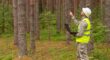
Arborists evaluate trees from different vantage points when needed, examining conditions at the trunk and within the canopy as part of a thorough risk assessment.
Find Out How Much Risk Your Tree Actually Poses
If a tree is leaning, showing signs of decay, has developed structural defects, or has you questioning whether it’s safe, a visual estimate may not give you the answers you need. A professional tree risk assessment provides a documented evaluation of the tree’s condition and risk, along with recommendations for what should happen next.
Schedule a professional tree risk assessment with Aspen’s TRAQ-qualified, ISA Certified Arborists to get a clearer understanding of your tree and make an informed decision about whether it needs monitoring, pruning, additional testing, or removal.